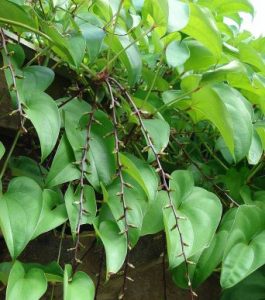
 Common Name: Yams
Description
Dioscorea alata, known as purple yam and many other names, is a species of yam, a tuberous root vegetable. The tubers are usually bright lavender in color, hence the common name, but they may sometimes be white. It is sometimes confused with taro and the Okinawa sweet potato (Ipomoea batatas cv. Ayamurasaki), although D. alata is also grown in Okinawa where it is known . . . . .Read more
References
Switchboard
Wikipedia
Annuals
Plectranthus esculentus
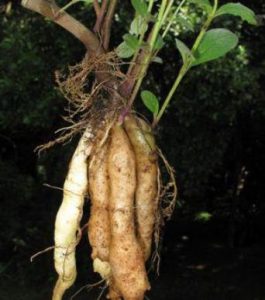 Common Name: African Potato
Description
Plectranthus esculentus, with English common names kaffir potato, and Livingstone potato, is a species of plant in the dicot family Lamiaceae. It is indigenous to Africa, where it is grown for its edible tubers. It is more difficult to cultivate than Plectranthus rotundifolius, but able to give greater yields. Although the crop is similar to a potato it is from the mint family but it is still quite nutritious and useful. This crop can benefit many subsistence farmers since it is native, easy to grow, growing popularity in the market and quite nutritious. . . . .Read more
References
Switchboard
Wikipedia
Colocasia esculenta
 Common Name: Taro
Description
Colocasia esculenta is a tropical plant grown primarily for its edible corms, the root vegetables most commonly known as taro. It is believed to be one of the earliest cultivated plants. Linnaeus originally described two species which are now known as Colocasia esculenta and Colocasia antiquorum of the cultivated plants that are known by many names including eddoes, dasheen, taro, but many later botanists consider them all to be members of a single, very variable species, the correct name for which is Colocasia esculenta . . . .Read more
References
Switchboard
Wikipedia
Digitaria exilis
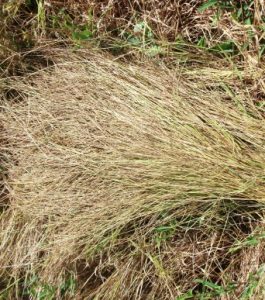 Common Name: Fonio
Description
Digitaria exilis, with English common names white fonio, fonio millet, and hungry rice or acha rice, is a grass species. It is the most important of a diverse group of wild and domesticated Digitaria species known as fonio that are harvested in the savannas of West Africa. The grains are very small. It has potential to improve nutrition, boost food security, foster rural development and support sustainable use of the land. . . . .Read more
References
Switchboard
Wikipedia