MEDIA RELEASE| Enhancing African orphan crops with genomics


Nairobi, Kenya. 24 March 2020 — Malnutrition in many African nations is widespread but can be addressed by diversifying food systems with a wider range of nutritious crops. To support this, the African Orphan Crops Consortium is applying genome-enabled methods to improve the production of under-researched (‘orphan’) crops on the continent.

“Orphan crops”, explains Ramni Jamnadass, lead author of a Comment piece about the Consortium just published in Nature Genetics, “are crops that have received only minor investments in the past, but often are well adapted to local environments and cultures and are nutritious, being rich in vitamins, essential minerals and other micronutrients important for healthy diets. The reasons for their past neglect include a focus over the last century on increasing the yields of major crops as the primary providers of calories but with less attention being given to providing crucial micronutrients.”

In some cases, too, orphan crops have been difficult to research and improve because of their particular biologies. With the advent of new crop improvement methods that include genomic approaches, however, such barriers are easier to overcome.

The Consortium works on 101 orphan crops chosen as priorities for consumers and farmers in Africa. These encompass plants that are part of Africa’s historically neglected bounty of biodiversity. Many of the species are at threat, meaning that if they are not improved and brought into wider cultivation now, the opportunity to do so will be lost forever. The plant species included feature a wide range of nutritious foods, such as edible roots, leaves, seeds, and fruit.

The Consortium develops genomic resources of these crops and makes these available freely to all. At the same time, the UC Davis-led African Plant Breeding Academy empowers the continent’s plant breeders to use these resources through an intensive training and mentoring program. The Academy is a model for the importance of continuing education and professional development of Africa’s scientists. By the end of 2019, 114 alumni from 27 African nations, collectively working on more than 100 crops, had graduated. In the Academy’s teaching, participants share their experiences to support translational learning so that new breeding approaches can be fully exploited. This involves considering ‘orthologous’ genes that contribute to the same function across crops and for which knowledge of their role in one crop may be applied to another.

As Africa’s national economies transform there will be new opportunities for orphan crops to support forward-looking healthful food systems. These are needed to counter the current trend toward more homogenised diets, something which applies worldwide, with its negative consequences for human health and the environment.

Jamnadass concludes: “Though the challenges involved are complex, the rewards for society in diversifying food production are large. We encourage more colleagues to engage in orphan crop research and to support such work in Africa and globally.”

Read the article
Jamnadass R, Mumm RH, Hale I, Hendre P, Muchugi A, Dawson IK, Powell W, Graudal L, Yana-Shapiro H, Simons AJ, van Deynze A. 2020. Enhancing African orphan crops with genomics. Nature Genetics. https://doi.org/10.1038/s41588-020-0601-x

The team of authors above was drawn from ICRAF; University of Illinois, Urbana; University of New Hampshire, Durham; Scotland’s Rural College, Edinburgh; University of Copenhagen, Frederiksberg; and University of California, Davis. The African Orphan Crops Consortium is supported by the African Union’s Development Agency. A list of other core Consortium partners is given in the article and on the Consortium’s web site.

Media enquiries: Jeanne Finestone, Head of Communications, ICRAF: j.finestone@cgiar.org; +254 711 946327.

Promoting neglected and underutilized crop species


Crops that have been forgotten over the last century are being rediscovered. Scientists and policymakers are now beginning to recognize the value of so-called ‘orphan’ crops, affirming what local communities have known for generations. The African Yam Bean, the Desert Date and Ber (a stocky tree with a vitamin-rich berry) exemplify the paradigm. Though not traded internationally, they are uniquely adapted to their local environments and play a vital role in supporting diverse diets in Sub-Saharan Africa.

Photo: ©FAO/Giulio Napolitano

A woman cleaning Moringa seeds in Niger. Moringa is a genus of shrubs and trees with multi-purpose uses. All parts of the Moringa tree are edible.

Also known as ‘neglected and underutilized’, ‘minor’ or ‘promising’ crops, orphan crops have been overlooked by research, extension services and policy makers; governments rarely allocate resources for their promotion and development. That results in farmers planting them less often, reduced access to high quality seeds, and loss of traditional knowledge.

Neglected and underutilized species have been overshadowed by those in greater demand. Of the 30,000 edible plant species, a mere 30 are used to feed the world.

Yet these neglected and underutilized crops can help to increase the diversification of food production, adding new species to our diets that can result in better supply of particular nutrients, i.e. essential amino acids, fiber, proteins.

In addition to diversifying nutritional intake, neglected and underutilized crops provide economic and environmental benefits. Farmers can grow them on their own, as part of crop rotation systems or inter-plant them with other crops, protecting and enhancing agro-biodiversity at the field level. Having a bigger number of species to choose in a crop rotation system allows farmers to have a more sustainable production system. By changing species in a crop rotation system the cycle of some pests and diseases is disrupted and probabilities of infestations are reduced.

Famers harvesting teff in Ethiopia. Teff is an underutilized crop, originating from Ethiopia and Eritrea. ©FAO/Giulio Napolitano

“By expanding the portfolio of crops available to farmers, we can help build more diverse and resilient cropping systems,” FAO Assistant Director-General Ren Wang said. “FAO would like to encourage investments in researching and improving the productivity, adaptability and utilization of neglected crops,” he added, announcing new efforts to promote wider use of neglected and underutilized crop species and their varieties in Africa.

FAO, the World Agroforestry Centre (ICRAF) and other partners have agreed to work together to strengthen the capacities of FAO member countries and to better focus research and development, plant breeding and seed delivery systems.

The African Orphan Crop Consortium (AOCC), an African-led, international consortium founded by the New Partnership for Africa’s Development (NEPAD) and Mars, Incorporated are sequencing the genomesof 101 African underutilized crops and making this information publicly available. The AOCC is also training African plant scientists to make crops and their varieties more nutritious, and improve their yields and ability to withstand the effects of climate change.

Moringa seedlings at a nursery in Tanzania. All parts of the Moringa tree are edible. ©FAO/Daniel Hayduk

“This collaboration aims to enhance Africa’s food security with African scientists using some of the best tools and equipment available anywhere in the world to make safe, nutritious and affordable foods available on a sustainable basis,” said ICRAF Director General Tony Simons, whose organization provides Secretariat services, a laboratory and classrooms to the AOCC.

“This information will allow breeders to use the same strategies and technologies as those for Western crops, such as maize, to make rapid improvements in African crops,” added Simons. Among the crops being researched at ICRAF is the Baobab, whose calcium-laden fruit and leaves are prized for sauce in West Africa.

The recently launched efforts are in line with FAO’s Second Global Plan of Action for Plant Genetic Resources for Food and Agriculture and the International Treaty on Plant Genetic Resources for Food and Agriculture, which promote the conservation and sustainable use of neglected and underutilized species.

This initiative will raise awareness of the potential role of neglected and underutilized crops in more productive and sustainable crop production systems that are resilient to the effects of climate change.

A group of people heading towards Mangoky River (Madagascar) past Baobab trees. Baobab leaves and fruits are sources of food for people and fodder for animals. ©FAO/Aris Mihich

Originally posted on the website of FAO

Sequencing all life captivates biologists


“To sequence everything in the world—that is the reason we are here.” With those words last week, China’s genome pioneer Huanming Yang publicly kicked off what he hopes will become a massive international collaboration that will dwarf the Human Genome Project of the 1990s and provide a new basis for understanding and conserving the world’s life. Read more
This greater bird of paradise in Indonesia and
the plants around it may have their DNA deciphered.
CREDIT: TIM LAMAN/NATIONAL GEOGRAPHIC CREATIVE

How Happiness is breeding plants for Africa’s future


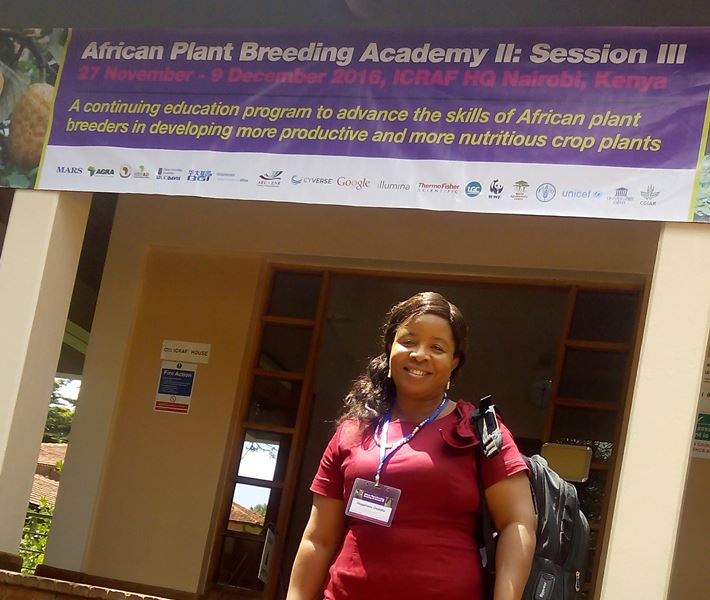
Happiness Oselebe, geneticist and mother of six, one of 29 senior plant breeders from around Africa attending the African Plant Breeding Academy in July 2016 at ICRAF. Photo: World Agroforestry Centre/Catharine Watson

Plant breeders are improving food plants and building a more food-secure future for Africa. One has been working at it all her life despite early challenges.
A plant breeder called Happiness spent 17 months trying to study a herbaceous vine prior to breeding.

‘It is found in the thick forest. But when I tried to domesticate it, it never flowered. This indicated that it may be plastic in its floral ontogeny requiring certain environmental signals/stimuli to trigger flowering’, she said.

Undeterred by this, the Nigerian scientist turned her attention to bananas, yams, rice and a myriad of other crops. But Happiness Oselebe has a lingering regret about the vine, called Dioscoreophyllum cumminsii from where  the ‘serendipity berry‘ is harvestedRead more…